Multiple publishers
PNLD Literary
When a teacher picks a book, they're not filling out a form — they're deciding what an entire generation will read. We worked to make sure that decision included our clients.
Services
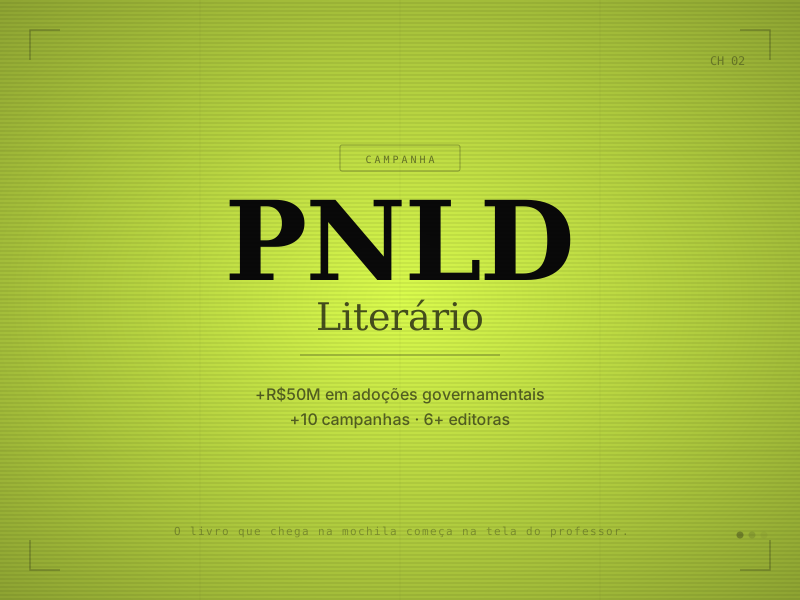
+R$50M
Government adoptions
+10
Campaigns
6+
Publishers served
The book that shapes a generation
There’s something radical about the PNLD. The Brazilian government buys books — millions of them — and distributes them for free to students in public schools across the country. For many of those kids, the volume that lands in their backpack is the first book they’ll ever call their own.
And it’s the teacher who chooses it.
Not an algorithm. Not a distant committee. A literature teacher in the rural northeast. A Portuguese teacher at a school on the outskirts of Belém. They browse a catalog with hundreds of titles, compare, reflect, decide. That choice determines which publishers survive another cycle — and which works reach the hands of those who need them most.
When we understood that, we understood our role too. It wasn’t about selling books. It was about making sure the right book reached the right teacher.
The challenge
The PNLD — Brazil’s National Textbook Program — is the largest government book procurement program in the world. Hundreds of millions of copies. Every publishing house in the country, from major conglomerates to independent imprints, competing for the same spot in a student’s backpack. The selection window is short and intense. If you haven’t built a relationship beforehand, you have no voice when the decision comes.
Our clients’ problem wasn’t quality. The books were good. The problem was visibility and trust. How do you get a teacher in the Amazon region to discover a title launched in Rio? How do you sustain presence year-round instead of just exploding during the selection period? How do you turn a literary work into a pedagogical object of desire — without losing the seriousness the context demands?
We worked with Ediouro, Estrela, Record, Melhoramentos, Autêntica, Perspectiva and others across more than ten campaigns. Each publisher had its own catalog, voice and specific teacher audience. But the core challenge was the same: build real presence where decisions actually happen.
Community as strategy, not tactic
The first thing we realized: teachers don’t want to be hit by ads. They want to learn. They want to exchange experiences. They want to know what other teachers are doing with that book in the classroom.
So we built communities. Messaging app groups, segmented email lists, social media profiles that spoke the language of the classroom — not the publishing industry. It wasn’t about immediate scale. It was about creating spaces where teachers felt at home.
A teacher who joins a literature community isn’t being captured. They’re choosing to be there.
Over time, those communities became the primary channel for each campaign. Organic engagement outperformed paid. Questions that surfaced in the groups became content. Teachers who first arrived as an audience became multipliers.
Continuous presence, not isolated campaigns
The most common mistake in PNLD campaigns is timing: pour everything into the selection window, then disappear. When the next cycle starts, you’re starting from zero.
We flipped that logic. Outside the selection period, the work was about education and relationship-building — content on how to use the books pedagogically, live sessions with authors, support materials teachers could bring into the classroom. When the selection window opened, paid campaigns were reaching an audience that already knew and trusted the publisher.
We weren’t introducing a book. We were reinforcing a choice the teacher was already leaning toward.
That completely changed the cost-to-result ratio. Paid media in an active community context performs differently from campaigns running in a vacuum. Teachers already engaged with a publisher’s content converted with far greater consistency.
Content that respects the teacher
We produced genuinely useful pedagogical materials. Not institutional brochures dressed up as educational content. Real reading guides, suggested lesson sequences, thematic discussions, alignment with national curriculum standards.
Material a teacher could use on a Monday morning, in the classroom, with students. That was the criteria. If it had no immediate practical value, it didn’t go in.
The logic was simple: when a publisher delivers real value before asking for anything, trust accumulates. And trust, at the moment of decision, carries more weight than any ad.
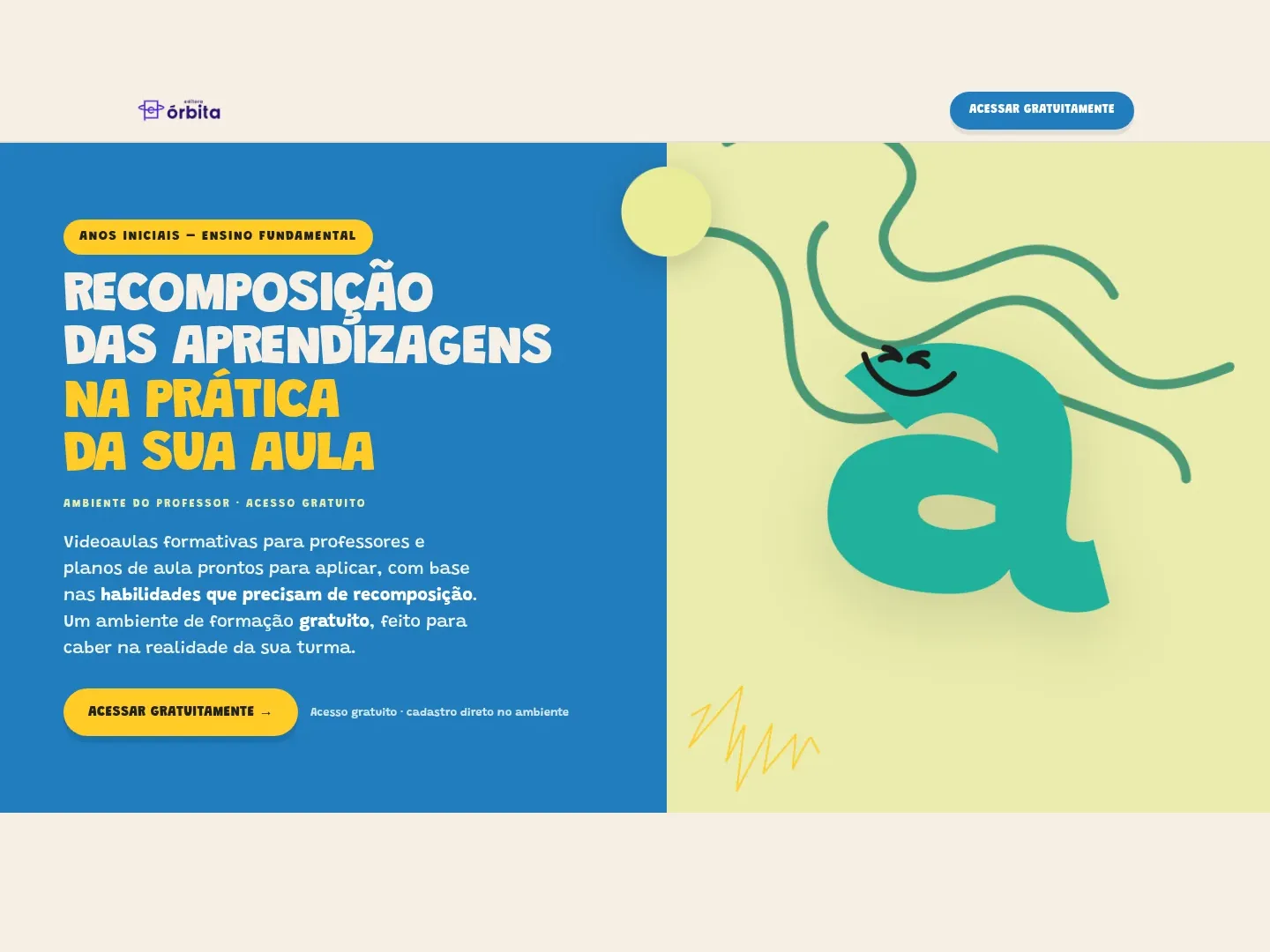
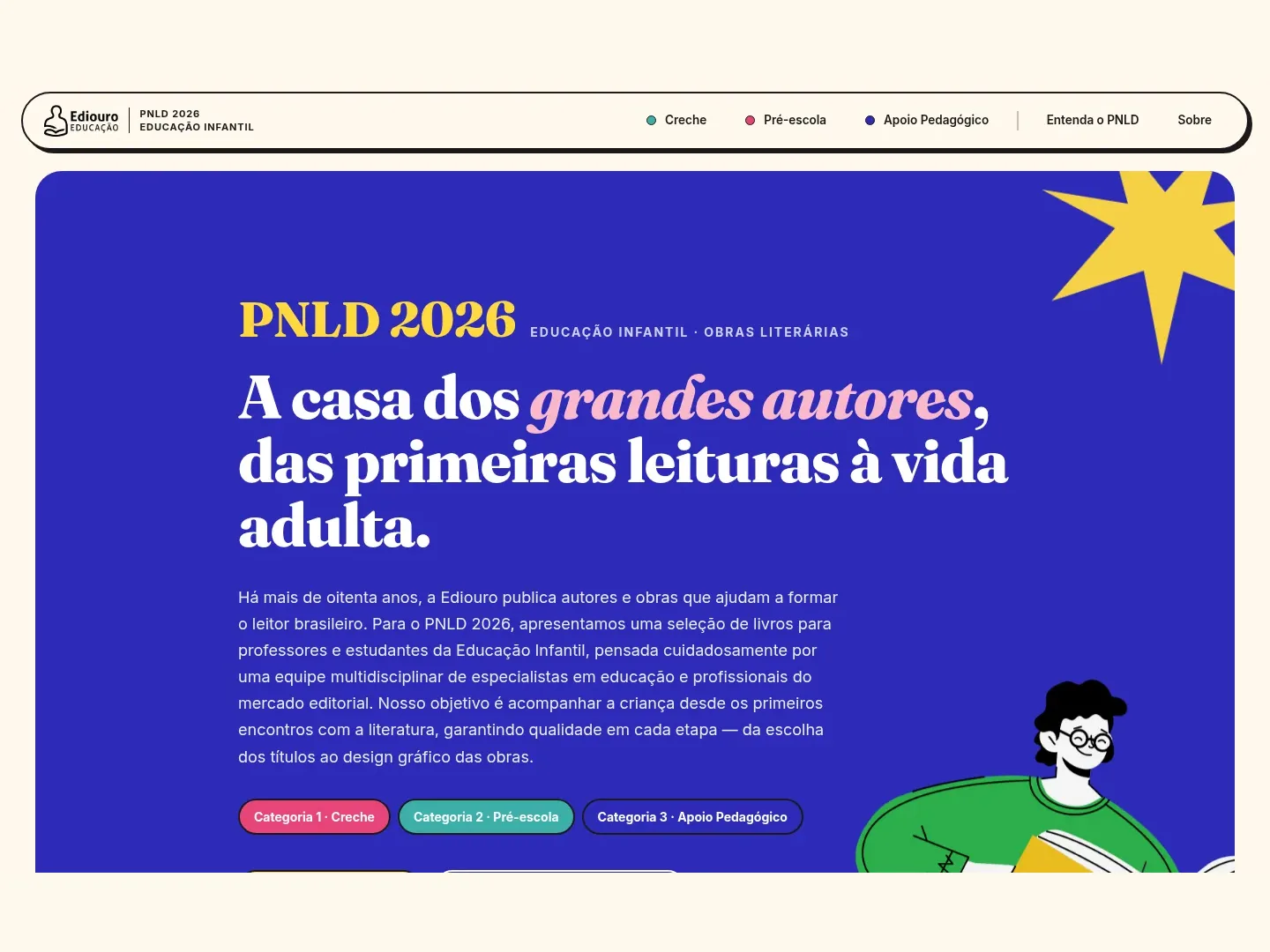
The landing pages we built followed the same logic. They weren’t cold conversion pages. They were informational environments with easy access to all support materials, full book specs, a content archive — and, at the end of a path that made sense, the route to the official selection form.
What we built
More than ten campaigns. Six or more publishers. Years of PNLD cycles with strategies that evolved every round. The result in the frontmatter — over R$50 million in government adoptions — is real, but it’s also just the surface.
What remains, and what no metric can hold, is proof that it’s possible to work the public procurement market with intelligence and respect. That teachers deserve to be treated as curators, not targets. That an independent publisher can compete with the giants when it builds genuine presence over time.
The book that lands in a student’s backpack begins long before that — on a teacher’s screen. We take care of that journey.
Data for nerds
For those who want to understand the structure behind the campaigns.
Scope and volume
- 10+ campaigns across multiple PNLD cycles
- 6+ publishers served: Ediouro, Estrela, Record, Melhoramentos, Autêntica, Perspectiva
- Active in all phases: pre-selection, selection window and post-cycle
Channels and platforms
- Meta Ads (Facebook and Instagram) — targeting by interest in education and literature
- Google Ads — search and display with PNLD and title-specific keywords
- YouTube — training videos and book presentations
- WhatsApp and Telegram — teacher community groups
- Email marketing — segmented lists by subject area, region and school level
Content production
- Landing pages per publisher and per PNLD cycle
- Pedagogical support materials (reading guides, lesson sequences)
- Educational social media content
- Scripts and video production with authors and specialists
Community management
- Active messaging app groups with teachers from across Brazil
- Content moderation and curation throughout the full cycle
- Off-season activation strategy to maintain engagement between selection periods
- Community-generated content used as input for paid campaigns
Metrics prioritized
- Adoption volume per title (data provided by publishers after government procurement cycle)
- Community engagement rate (not just reach)
- Cost per active teacher in the database (not just cost per click)
- Retention between cycles (teachers who remained active from one PNLD to the next)
How would you like your story to be told?
Tell us what you have in mind. We listen before proposing anything.
Talk to us